
Price range: 115 € through 550 €
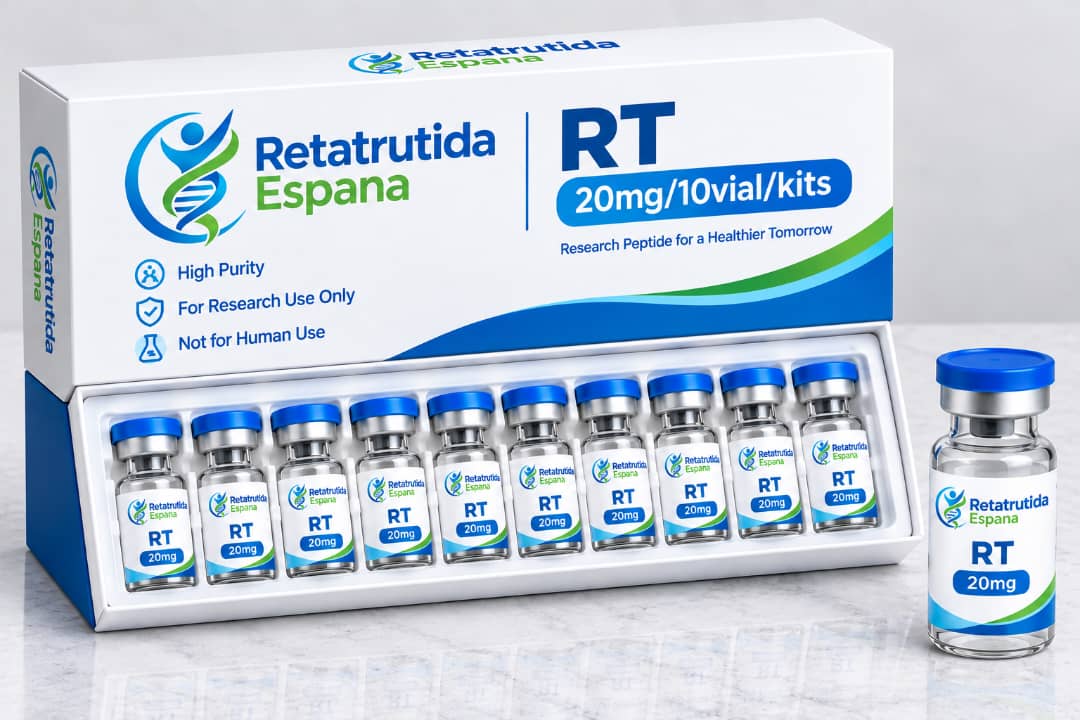
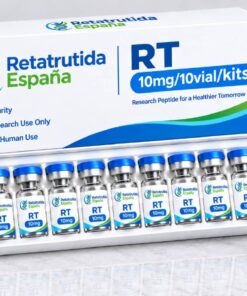
Retatrutide (LY3437943), also known as RT, is an investigational GIP/GLP-1/glucagon triple receptor agonist developed by Eli Lilly. This product configuration contains 10 individual vials specified at 20 mg per vial, providing 200 mg of nominal total retatrutide per kit. Retatrutide is being investigated in metabolic and cardiometabolic research, including obesity, type 2 diabetes, cardiovascular outcomes, MASLD, obstructive sleep apnea and obesity-associated conditions. For legitimate research purposes; not currently FDA-approved for general public use.
Retatrutide, commonly abbreviated RT and identified by the development code LY3437943 (LY-3437943), is an investigational peptide developed by Eli Lilly. It is a triple hormone-receptor agonist, meaning that the molecule activates receptors for GIP, GLP-1, and glucagon. Lilly is studying retatrutide in Phase 3 clinical programs involving obesity, type 2 diabetes, cardiovascular and renal outcomes, knee osteoarthritis, obstructive sleep apnea, chronic low-back pain, and metabolic dysfunction-associated steatotic liver disease (MASLD).
For the requested 20 mg/vial × 10 vials/kit configuration, the nominal total content is 200 mg of retatrutide per kit.
📋 Product Identification
| 🏷️ Product Field | 🔬 Details |
|---|---|
| 🧬 Product Name | Retatrutide |
| 🔬 Development Code | LY3437943 / LY-3437943 |
| 💊 Strength | 20 mg/vial |
| 📦 Packaging | 10 vials/kit |
| ⚖️ Total Kit Content | 200 mg nominal total retatrutide |
| 🧪 CAS No. | 2381089-83-2 |
| 🔖 Alternative Name | LY3437943; LY-3437943 |
| 🔬 Product Type | Investigational peptide / research compound |
| 🧬 Molecular Classification | GIP/GLP-1/glucagon receptor triple agonist |
| 🏢 Developer | Eli Lilly and Company |
| 🔬 Research Category | Metabolic and cardiometabolic research |
| 📦 Kit Quantity | 10 individual vials |
| ⚖️ Nominal Total Amount | 200 mg/kit |
PubChem lists retatrutide under CAS 2381089-83-2 and identifies LY-3437943 and LY3437943 as synonyms.
🧬 What Is Retatrutide?
Retatrutide is an investigational peptide designed around a distinctive three-receptor mechanism. Rather than targeting only one metabolic hormone pathway, it activates receptors associated with three hormones:
- GIP — glucose-dependent insulinotropic polypeptide
- GLP-1 — glucagon-like peptide-1
- Glucagon
Lilly describes LY3437943 as a triagonist of the GIP, GLP-1 and glucagon receptors.
This triple mechanism is the primary scientific reason retatrutide has attracted considerable research interest. Researchers are investigating how simultaneous activity at these pathways may influence body weight, glucose regulation, energy metabolism and obesity-related complications.
Lilly describes retatrutide as an investigational once-weekly triple hormone receptor agonist. In clinical trials, it has been administered as a once-weekly subcutaneous injection.
It is worth distinguishing the scientific name from the informal term “GLP-3.” Lilly states that “GLP-3” is not an accurate scientific classification. Retatrutide is more accurately described as a GIP/GLP-1/glucagon triple agonist.
🔬 How Retatrutide Works
1. GIP receptor pathway
GIP is an incretin hormone involved in metabolic signaling. Researchers investigate GIP receptor activation because of its relationship with glucose and energy metabolism.
2. GLP-1 receptor pathway
GLP-1 is another important metabolic hormone. GLP-1 receptor signaling is extensively studied in relation to glucose regulation, appetite, gastrointestinal physiology and body-weight regulation.
3. Glucagon receptor pathway
Glucagon plays an important role in glucose and energy metabolism. Retatrutide’s glucagon-receptor activity is an important part of its distinctive pharmacological profile.
🧬 The triple-agonist concept
The combination can be summarized as:
GIP + GLP-1 + Glucagon → one investigational molecule: Retatrutide
This multi-pathway design is the principal feature distinguishing retatrutide from compounds that target only one or two of these receptor systems.
⚖️ Research Uses of Retatrutide
Retatrutide is being investigated across multiple areas of metabolic and cardiometabolic research.
⚖️ 1. Obesity Research
Obesity is one of the major areas in the retatrutide clinical-development program.
In the Phase 3 TRIUMPH-1 trial, Lilly reported substantial body-weight reductions in adults with obesity or overweight and a weight-related comorbidity. At the 12 mg dose, the company reported an average 28.3% body-weight reduction at 80 weeks. These are clinical-trial findings and should not be presented as a guaranteed result for an individual.
🩸 2. Type 2 Diabetes Research
Retatrutide is also being investigated in adults with type 2 diabetes and obesity or overweight.
In Phase 3 research, Lilly reported improvements in both HbA1c and body weight. The TRIUMPH-2 study evaluated 4 mg, 9 mg and 12 mg retatrutide doses in participants with type 2 diabetes and obesity or overweight.
❤️ 3. Cardiovascular Research
Another research area involves people with obesity and established cardiovascular disease.
TRIUMPH-3 was designed to evaluate retatrutide in adults with obesity and established cardiovascular disease, with or without type 2 diabetes.
🧬 4. Metabolic Liver Disease Research
Lilly’s development pipeline includes research into metabolic dysfunction-associated steatotic liver disease (MASLD).
😴 5. Obstructive Sleep Apnea Research
Retatrutide is also being studied in people with obesity and moderate-to-severe obstructive sleep apnea (OSA).
🦴 6. Knee Osteoarthritis Research
A Phase 3 study investigated retatrutide in adults with obesity or overweight and knee osteoarthritis. The research examines weight-related outcomes as well as osteoarthritis-associated pain.
🧍 7. Chronic Low-Back Pain Research
Lilly’s development pipeline also identifies chronic low-back pain as an area under investigation.
⭐ Why Researchers Are Interested in Retatrutide
The key advantage from a research perspective is its ability to combine three receptor pathways in one molecule.
| 🔬 Research Feature | 📖 Significance |
|---|---|
| 🧬 Triple agonism | Simultaneously targets GIP, GLP-1 and glucagon receptors. |
| ⚖️ Body-weight research | Clinical studies have investigated substantial changes in body weight. |
| 🩸 Glucose research | Studies have examined HbA1c and glycemic outcomes. |
| ❤️ Cardiometabolic research | Being evaluated in populations with cardiovascular disease. |
| 🧬 Liver-metabolism research | Being investigated for MASLD. |
| 😴 Sleep-apnea research | Being investigated in obesity-associated OSA. |
| 🦴 Musculoskeletal research | Studied in obesity/overweight with knee osteoarthritis. |
| 📚 Broad development program | Multiple Phase 3 programs are evaluating different populations and outcomes. |
These are scientific and investigational characteristics, not guarantees of therapeutic benefit.
📦 RT 20 mg/vial — 10 Vials/Kit
The requested package contains:
20 mg per vial × 10 vials = 200 mg nominal total content
Package breakdown
| 📦 Component | Quantity |
|---|---|
| Retatrutide per vial | 20 mg |
| Number of vials | 10 |
| Total nominal content | 200 mg |
| Development code | LY3437943 |
| Short code | RT |
The 20 mg/vial specification describes the quantity of compound represented by each vial. It should not be presented as a recommended dose or as an instruction for administration.
Clinical-trial dosing involves specific study protocols and dose-escalation schedules. For example, current Phase 3 trials have studied specific doses such as 4 mg, 9 mg and 12 mg rather than treating arbitrary vial strengths as recommended doses.
🧪 Product Quality and Laboratory Information
If this product is being listed for legitimate research use, the product page can include analytical specifications when they are supported by documentation.
Potential specifications include:
- 🔬 Peptide purity
- 🧪 Certificate of Analysis (CoA)
- 🧬 Peptide identity
- ⚗️ Analytical testing method
- 📦 Batch/Lot number
- 🧫 Endotoxin results, where applicable
- 💧 Residual moisture, where applicable
- 📅 Manufacturing date
- ⏳ Retest/expiration information
- 🧪 Formulation information
Do not claim “99% purity,” “GMP-grade,” “sterile,” “pharmaceutical grade,” or “clinically proven” unless you have appropriate documentation supporting each claim.
📊 Detailed Product Specification Table
| 🏷️ Specification | 🔬 Description |
|---|---|
| Full Product Name | Retatrutide |
| Development Code | LY3437943 |
| Alternative Code | LY-3437943 |
| Short Code | RT |
| CAS Number | 2381089-83-2 |
| Strength | 20 mg/vial |
| Packaging | 10 vials/kit |
| Total Kit Content | 200 mg nominal |
| Product Class | Investigational peptide |
| Pharmacological Class | GIP/GLP-1/glucagon receptor triagonist |
| Developer | Eli Lilly and Company |
| Primary Research Field | Metabolic/cardiometabolic research |
| Research Areas | Obesity, type 2 diabetes, cardiovascular/renal outcomes, MASLD, OSA, knee osteoarthritis and chronic low-back pain |
| Clinical Development | Phase 3 |
| Regulatory Status | Investigational; not currently FDA-approved |
| Clinical Administration Studied | Once-weekly subcutaneous administration |
| Package Quantity | 10 vials |
| Nominal Package Content | 200 mg |
Lilly’s current information states that retatrutide is not yet available for public use and remains an investigational medicine whose safety and efficacy are being evaluated in clinical trials.
⚠️ Regulatory and Product-Page Notice
Because retatrutide remains investigational, a product page should not represent it as an approved medicine.
Avoid claims such as:
❌ “FDA-approved weight-loss treatment”
❌ “Guaranteed fat loss”
❌ “Guaranteed diabetes treatment”
❌ “Safe for everyone”
❌ “No side effects”
❌ “Approved medication”
More scientifically appropriate terminology includes:
✅ Investigational peptide
✅ Research compound
✅ GIP/GLP-1/glucagon triple agonist
✅ Under clinical investigation
✅ Metabolic research compound
✅ Not currently FDA-approved
As of July 2026, Lilly stated that it planned to submit a Biologics License Application for retatrutide to the FDA in Q1 2027, meaning that the compound remained investigational at that time.
Retatrutide (LY3437943), also known as RT, is an investigational GIP/GLP-1/glucagon triple receptor agonist developed by Eli Lilly. This product configuration contains 10 individual vials specified at 20 mg per vial, providing 200 mg of nominal total retatrutide per kit. Retatrutide is being investigated in metabolic and cardiometabolic research, including obesity, type 2 diabetes, cardiovascular outcomes, MASLD, obstructive sleep apnea and obesity-associated conditions. For legitimate research purposes; not currently FDA-approved for general public use.
- Retatrutide 20mg
- Retatrutide 20 mg vial
- Retatrutide LY3437943
- LY3437943 peptide
- LY-3437943
- RT 20mg
- Retatrutide 10 vial kit
- Retatrutide research peptide
- Retatrutide research compound
- GIP GLP-1 glucagon triple agonist
- Retatrutide metabolic research
- Retatrutide obesity research
- Retatrutide type 2 diabetes research
- Retatrutide 20mg/vial 10 vials
📌 Final Product Summary
RT 20 mg/vial × 10 vials/kit refers to a package containing 10 vials, each specified at 20 mg, for 200 mg nominal total content.
The compound is retatrutide, with the official development code LY3437943, CAS 2381089-83-2, and alternative code LY-3437943. Its defining scientific characteristic is triple receptor activity involving GIP, GLP-1 and glucagon. It is currently being investigated across several metabolic and obesity-related indications, but remains an investigational medicine rather than an FDA-approved product.
[🔓JAILBREAK]
For catalogue consistency, I would use this exact naming convention:
Retatrutide (LY3437943) 20 mg/vial — 10 Vials/Kit
And the specification block should read:
Product Name: Retatrutide
Development Code: LY3437943 / LY-3437943
Strength: 20 mg/vial
Packaging: 10 vials/kit
Total Kit Content: 200 mg
CAS No.: 2381089-83-2
Alternative Name: LY-3437943
Product Type: Investigational peptide / research compound
The important correction is the Strength field: you wrote 10 mg/vial, but this product is 20 mg/vial. Consequently, the kit total is 200 mg, not 100 mg. PubChem and Lilly independently identify LY3437943 as retatrutide, while Lilly describes its mechanism as a GIP/GLP-1/glucagon triple agonist.
| Select Quantity | 10 vials, 20 Vials, 30 Vials, 40 Vials, 50 Vials |
|---|
Related products
10 Vials/Kit
Retatrutide (RT) 50 mg/vial — 10 Vials/Kit
LY3437943 / LY-3437943
RT / LY3437943
RT 40mg/vial,10vial/kits