
Price range: 112 € through 510 €
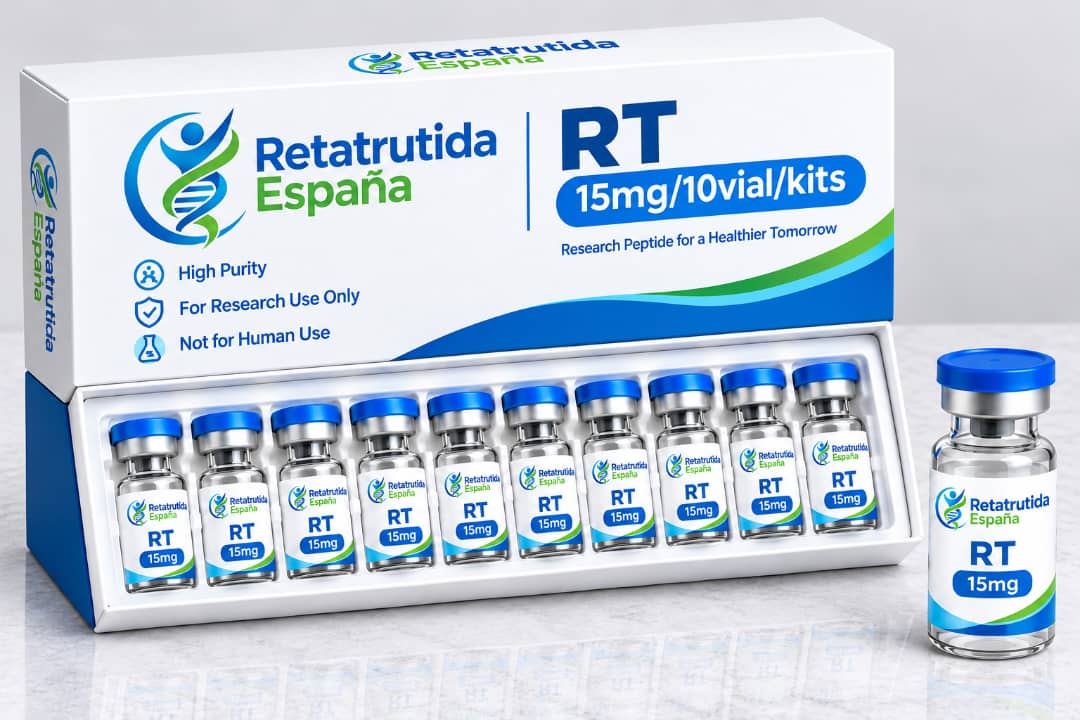
Retatrutide (LY3437943), also known as RT, is an investigational triple GIP/GLP-1/glucagon receptor agonist developed by Eli Lilly. This product configuration contains 10 individual vials specified at 15 mg per vial, providing 150 mg of nominal total retatrutide per kit. Retatrutide is being investigated in metabolic and cardiometabolic research, including obesity, type 2 diabetes, cardiovascular outcomes, MASLD, obstructive sleep apnea and obesity-associated conditions. For legitimate research purposes; not currently FDA-approved for general public use.
Retatrutide (RT) 15 mg/vial — 10 Vials/Kit
Retatrutide, commonly abbreviated RT and identified by Eli Lilly’s development code LY3437943 (LY-3437943), is an investigational peptide designed as a triple hormone-receptor agonist, activating the GIP, GLP-1, and glucagon receptors. Lilly is currently studying retatrutide in Phase 3 clinical programs involving obesity, type 2 diabetes, cardiovascular and renal outcomes, knee osteoarthritis, obstructive sleep apnea, chronic low-back pain, and metabolic dysfunction-associated steatotic liver disease (MASLD).
For your requested 15 mg/vial × 10 vials/kit configuration, the nominal total peptide content is 150 mg per kit.
📋 Product Identification
| 🏷️ Product Field | 🔬 Detailed Information |
|---|---|
| Product Name | Retatrutide |
| Development Code | LY3437943 / LY-3437943 |
| Strength | 15 mg/vial |
| Packaging | 10 vials/kit |
| Total Kit Content | 150 mg nominal total retatrutide |
| CAS No. | 2381089-83-2 |
| Alternative Name | LY3437943; LY-3437943; Retatrutide [USAN] |
| Product Type | Investigational peptide / research compound |
| Abbreviation | RT / Reta |
| Molecular Classification | GIP/GLP-1/glucagon triple receptor agonist |
| Developer | Eli Lilly and Company |
| Primary Research Field | Metabolic and cardiometabolic research |
| Kit Quantity | 10 individual vials |
| Nominal Total Amount | 150 mg per kit |
PubChem lists retatrutide under CAS 2381089-83-2, with LY3437943 and LY-3437943 among its synonyms.
🧬 What Is Retatrutide?
Retatrutide is an investigational peptide developed by Eli Lilly. Its distinguishing feature is its three-way receptor activity.
Unlike compounds designed to act primarily through one receptor, retatrutide activates:
- GIP — glucose-dependent insulinotropic polypeptide receptor
- GLP-1 — glucagon-like peptide-1 receptor
- Glucagon — glucagon receptor
Lilly describes LY3437943 as a biologic entity acting as a triagonist at these three receptors.
This mechanism is the foundation of ongoing research into how combined incretin and glucagon signaling may influence body weight, glucose metabolism, energy balance, and broader cardiometabolic outcomes.
Lilly currently describes retatrutide as an investigational once-weekly triple hormone receptor agonist. In clinical trials, it has been administered as a once-weekly subcutaneous injection.
🔬 How Retatrutide Works
1. GIP receptor activity
GIP is an incretin hormone involved in metabolic regulation. Activation of the GIP pathway is being studied for its contribution to glucose regulation and metabolic signaling.
2. GLP-1 receptor activity
GLP-1 is another important metabolic hormone. GLP-1 receptor signaling has been extensively investigated in relation to glucose regulation, appetite, gastrointestinal function, and body-weight regulation.
3. Glucagon receptor activity
Glucagon plays an important role in energy metabolism and glucose homeostasis. Retatrutide’s additional glucagon-receptor activity is one of the features that differentiates it from many other incretin-based investigational and approved therapies.
The combination of all three pathways makes retatrutide a triple agonist, rather than the scientifically inaccurate informal term “GLP-3.” Lilly specifically notes that “GLP-3” is not an appropriate scientific classification for retatrutide.
⚖️ Research Uses of Retatrutide
Retatrutide is being investigated across a broad range of metabolic and obesity-related conditions.
⚖️ 1. Obesity and Weight-Management Research
One of the major areas of retatrutide research is obesity.
In the Phase 3 TRIUMPH-1 study, Lilly reported substantial reductions in body weight among participants receiving retatrutide. At the 12 mg study dose, participants experienced an average 28.3% reduction in body weight at 80 weeks. These are clinical-trial results, not a guarantee of an individual’s response.
🩸 2. Type 2 Diabetes Research
Retatrutide is also being studied in people with type 2 diabetes and excess weight.
Lilly reported Phase 3 findings showing improvements in HbA1c and body weight in the TRANSCEND-T2D program.
❤️ 3. Cardiovascular and Renal Research
Researchers are studying retatrutide in people with obesity and established cardiovascular disease.
The TRIUMPH-3 study evaluated the efficacy and safety of once-weekly retatrutide in adults with obesity and established cardiovascular disease.
🦴 4. Knee Osteoarthritis Research
Retatrutide has also been studied in adults with obesity or overweight and knee osteoarthritis.
The TRIUMPH-4 study investigated retatrutide in this population, reflecting interest in the relationship between obesity, weight reduction and obesity-associated musculoskeletal conditions.
😴 5. Obstructive Sleep Apnea Research
Another research area is moderate-to-severe obstructive sleep apnea associated with obesity.
Lilly’s development program includes retatrutide studies examining this condition.
🧬 6. Metabolic Liver Disease Research
Retatrutide is also being investigated in metabolic dysfunction-associated steatotic liver disease (MASLD).
🦴 7. Chronic Low-Back Pain Research
Lilly’s current pipeline additionally lists chronic low-back pain as an area being investigated with retatrutide.
⭐ Why Researchers Are Interested in Retatrutide
The principal scientific attraction of retatrutide is its multi-receptor mechanism.
| 🔬 Feature | 📖 Research Significance |
|---|---|
| 🧬 Triple agonist | Simultaneously activates GIP, GLP-1 and glucagon receptors. |
| ⚖️ Weight research | Clinical trials have investigated substantial body-weight reduction. |
| 🩸 Glucose research | Being studied for effects on HbA1c and glycemic control. |
| ❤️ Cardiometabolic research | Being evaluated in populations with obesity and cardiovascular disease. |
| 🧬 Metabolic research | Being investigated in MASLD and other metabolic conditions. |
| 😴 OSA research | Being studied in obesity-associated obstructive sleep apnea. |
| 🦴 Musculoskeletal research | Investigated in obesity-associated knee osteoarthritis. |
| 📚 Broad clinical program | Multiple Phase 3 studies are examining different populations and outcomes. |
These are research characteristics and investigated effects, rather than claims that every purchaser will experience the same results.
📦 Understanding the 15 mg/vial × 10 Vials/Kit Configuration
Your product configuration is straightforward:
15 mg per vial × 10 vials = 150 mg total nominal peptide content.
Product configuration
| 📦 Component | Quantity |
|---|---|
| Retatrutide per vial | 15 mg |
| Number of vials | 10 |
| Total nominal content | 150 mg |
| Development code | LY3437943 |
| Product abbreviation | RT |
The 15 mg/vial specification is a product-content specification, not a recommended clinical dose.
It is important not to imply that the entire 15 mg vial should be administered at once or that a 10-vial kit represents a particular treatment course. Clinical dosing in trials involves specific protocols, dose-escalation schemes, participant criteria, and medical monitoring.
🧪 Product Quality Information
For an ecommerce product page, quality specifications should only be included when supported by your supplier’s actual documentation.
You may include information such as:
- 🔬 Purity
- 🧪 Certificate of Analysis (CoA)
- 🧬 Peptide identity
- ⚗️ Analytical testing
- 📦 Batch/Lot number
- 🧫 Endotoxin testing, where documented
- 💧 Residual moisture, where documented
- 🧪 Formulation
- 📅 Manufacturing date
- ⏳ Expiration/retest date
Avoid automatically describing the product as “99% pure,” “GMP,” “sterile,” “pharmaceutical grade,” or “clinically proven” unless you have documentation establishing those specifications.
📊 Detailed Product Description
| 🏷️ Specification | 🔬 Description |
|---|---|
| Full Name | Retatrutide |
| Code Name | LY3437943 |
| Short Name | RT |
| CAS | 2381089-83-2 |
| Strength | 15 mg/vial |
| Package | 10 vials/kit |
| Total Content | 150 mg nominal |
| Compound Class | Investigational peptide |
| Mechanism | GIP/GLP-1/glucagon receptor triagonist |
| Developer | Eli Lilly and Company |
| Research Category | Metabolic/cardiometabolic |
| Research Areas | Obesity, type 2 diabetes, cardiovascular/renal outcomes, MASLD, OSA, osteoarthritis and chronic low-back pain |
| Clinical Development | Phase 3 programs |
| Regulatory Status | Investigational; not FDA-approved |
| Clinical Administration Studied | Once-weekly subcutaneous administration |
| Intended Description | Research/investigational compound |
Lilly states that retatrutide is not currently approved by the FDA and is available to participants through clinical trials while its safety and efficacy continue to be evaluated.
⚠️ Important Safety and Regulatory Information
Because retatrutide remains investigational, your product page should avoid presenting it as an approved medication.
Avoid claims such as:
❌ “FDA-approved weight-loss drug”
❌ “Guaranteed fat loss”
❌ “Guaranteed diabetes treatment”
❌ “Safe for everyone”
❌ “No side effects”
❌ “Approved medication”
❌ “Use this product to treat obesity”
More accurate language includes:
✅ Investigational peptide
✅ Research compound
✅ Triple GIP/GLP-1/glucagon receptor agonist
✅ Under clinical investigation
✅ Studied in metabolic and cardiometabolic research
✅ Not currently FDA-approved
Lilly’s July 2026 update stated that it planned to submit a Biologics License Application for retatrutide in Q1 2027, which further confirms that the compound remains in the investigational/development stage at present.
Retatrutide (LY3437943), also known as RT, is an investigational triple GIP/GLP-1/glucagon receptor agonist developed by Eli Lilly. This product configuration contains 10 individual vials specified at 15 mg per vial, providing 150 mg of nominal total retatrutide per kit. Retatrutide is being investigated in metabolic and cardiometabolic research, including obesity, type 2 diabetes, cardiovascular outcomes, MASLD, obstructive sleep apnea and obesity-associated conditions. For legitimate research purposes; not currently FDA-approved for general public use.
- Retatrutide 15mg,
- Retatrutide 15 mg vial,
- Retatrutide LY3437943,
- LY3437943 peptide,
- LY-3437943,
- RT 15mg,
- Retatrutide 10 vial kit,
- Retatrutide research peptide,
- Retatrutide research compound,
- GIP GLP-1 glucagon triple agonist,
- Retatrutide metabolic research,
- Retatrutide obesity research,
- Retatrutide type 2 diabetes research,
In short: RT 15 mg/vial × 10 vials/kit identifies a package containing 10 vials, each specified at 15 mg, for 150 mg nominal total content. The active compound is retatrutide (LY3437943), an investigational GIP/GLP-1/glucagon triple agonist currently undergoing clinical development.
| Select Quantity | 10 Vials, 20 Vials, 30 vials, 40 Vials, 50 Vials |
|---|
Related products
10 Vials/Kit
Retatrutide (RT) 50 mg/vial — 10 Vials/Kit
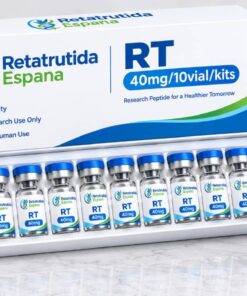
RT 40mg/vial,10vial/kits
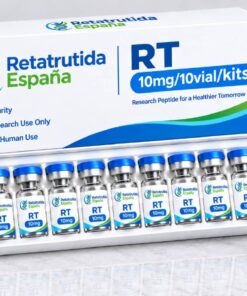
RT / LY3437943